the tower of london
Monday, May 01, 2006


Friday, April 28, 2006
british education
This headline appeared on BBC tv tonight-"Up to half a million pupils are in schools without permanent heads".
We all go to London tomorrow. We will stay at the Grange Fitzrovia Hotel -for just £50.We should have time for some sightseeing.Teosdee and Jack fly on Sunday morning.I only need to work next Thursday, as Monday is May Day and we are on strike on Tuesday and Wednesday. The local elections are on Thursday, not sure who I will vote for.If there is a party that will impose a curfew on anyone under 25 years old after 6pm,ban cars, and shoot any bus driver more than 10 minutes late, they will have my vote. Joseph and I will fly on Saturday.
We all go to London tomorrow. We will stay at the Grange Fitzrovia Hotel -for just £50.We should have time for some sightseeing.Teosdee and Jack fly on Sunday morning.I only need to work next Thursday, as Monday is May Day and we are on strike on Tuesday and Wednesday. The local elections are on Thursday, not sure who I will vote for.If there is a party that will impose a curfew on anyone under 25 years old after 6pm,ban cars, and shoot any bus driver more than 10 minutes late, they will have my vote. Joseph and I will fly on Saturday.
Wednesday, April 26, 2006
dahab
It was a shame to hear about the bombings in Dahab in Egypt. I had the pleasure to stay there 14 years ago.At that time it was basic to say the least. There were no hotels at that time, I slept on the floor inside a building more like a stable.It remains the hottest place that I've visited, 52c. I spent my days sitting on futons near the beach drinking coca-cola and smoking the 'peace pipe', dressed in arab garb with my jesus sandals on.The breeze from the red sea coming across from Saudi Arabia, was a hot,hot wind, jumping into the sea was the only relief-or hiding in the stable. Dahab was one of my earliest backpacking experiences and still one of the best. Bali,London,Dahab-tourists are an easy target for these cowards.
Sunday, April 23, 2006
storm clouds are a brewing...
7pm sunday evening, the sun is still shining here.i have just come in from the garden-sunbathing in my jeans and wooly jumper.As I speak there is a red rainstorm warning in HK, and an almighty thunderstorm on Hk island,give me the rain and thunder anyday.
I spent 6 hours in the garden studying today.Yesterday, i had 2 tutorials at the same time-so i had to excuse myself from the the first halfway through and interrupt the second, half way through.The other students think i'm mad to attempt both at the same time. When i'd had enough of studying today, i grabbed another chair and put my feet up ,switched up the tunes, closed my eyes and savored the sunshine. i was transported back to a distant time, again with my feet up on a chair, enjoying the sunshine.That time was 5 years ago almost to the day. I sat on my balcony in Pui O-Lantau, eyes closed , sun shining, with an endless supply of cans to keep me company. That was 2 weeks before Joseph was born-in the Philippines.I sat on that balcony for 3 days pretty much. As I sat in my garden today, Jack kept on climbing up on my legs and playing horsie.They are here now- wrestling with each other, less than 2 feet away. Jack gives as good as he gets, he often wins!Every fve minutes or so, one of them comes over and gives me a kiss.Teosdee is cooking-fresh salmon tonight, a whole salmon from ASda only £6.
The visa application for Teosdee takes up to 13 weeks.It must be done from a country where you are legally resident.Her HK residency visa needs to be renewed before that-that is why I need to go back to Hk.It could be October before they(Teosdee and Jack) can get back here. I am now certain that we do actually fulfill the criteria needed to get her visa- it will not be a problem. we have been married for 6.5 years, have 2 kids, I have a job here, we have a house(rented), joseph goes to school here...etc
As well as a spouse visa, Teosdee will be given Indefinite Leave to Remain, meaning that she will not have to go through a probationary period of 2 years before being given a permanent visa-if you have lived as man and wife for 4 years it's not necessary.
The only spanner in the works is that, i will not spend another winter here.
I spent 6 hours in the garden studying today.Yesterday, i had 2 tutorials at the same time-so i had to excuse myself from the the first halfway through and interrupt the second, half way through.The other students think i'm mad to attempt both at the same time. When i'd had enough of studying today, i grabbed another chair and put my feet up ,switched up the tunes, closed my eyes and savored the sunshine. i was transported back to a distant time, again with my feet up on a chair, enjoying the sunshine.That time was 5 years ago almost to the day. I sat on my balcony in Pui O-Lantau, eyes closed , sun shining, with an endless supply of cans to keep me company. That was 2 weeks before Joseph was born-in the Philippines.I sat on that balcony for 3 days pretty much. As I sat in my garden today, Jack kept on climbing up on my legs and playing horsie.They are here now- wrestling with each other, less than 2 feet away. Jack gives as good as he gets, he often wins!Every fve minutes or so, one of them comes over and gives me a kiss.Teosdee is cooking-fresh salmon tonight, a whole salmon from ASda only £6.
The visa application for Teosdee takes up to 13 weeks.It must be done from a country where you are legally resident.Her HK residency visa needs to be renewed before that-that is why I need to go back to Hk.It could be October before they(Teosdee and Jack) can get back here. I am now certain that we do actually fulfill the criteria needed to get her visa- it will not be a problem. we have been married for 6.5 years, have 2 kids, I have a job here, we have a house(rented), joseph goes to school here...etc
As well as a spouse visa, Teosdee will be given Indefinite Leave to Remain, meaning that she will not have to go through a probationary period of 2 years before being given a permanent visa-if you have lived as man and wife for 4 years it's not necessary.
The only spanner in the works is that, i will not spend another winter here.
Friday, April 14, 2006
If you can't take the heat...
I sat out in the garden today, catching up with my studies. It was 12c...but sunny!
I will work tomorrow-Easter Saturday,I swapped with a colleague so that I can take Teosdee to the airport in 2 weeks.
Shortly after arriving in the UK last July, I had to go to the Liverpool Dental hospital to have a tooth taken out. I could not find a dentist who was taking new patients.During the last 8 months I tried again periodically as and when i passed a dentist-but to no avail.
On Monday one of my front teeth cracked and fell out-I was devastated. I called 20 dentists and was told "there is a 5 month waiting list" "we haven't taken new patients for 10 years" ...and lots of other similar excuses.
I was told to call the local Primary Care Trust-the local NHS. After a few hours they called me and gave me the number of a dental surgery which was taking new patients. They gave me an appointment for Wednesday.I swallowed my pride and went to work on Tuesday with my speech impaired.
On Wednesday, as I sat down in the dentist's chair the c##t of a dentist said " I can only treat you today as a private patient" After arguing with him that i had registered and booked an appointment as an NHS patient, he took a look at my non existing tooth and told me if I paid or not he could not treat me as he was going on paternity leave!
As i stood in the reception to re-book my appointment and being told that the next available appointment would be a week on Thursday I nearly lost it.The problem was, that after not being able to see a dentist for 9 months-and their attitude being "you can always try somewhere else" I could not lose it. I had to be cool and polite-even though I had taken the day off for a non-existent appointment and would have to wait another 8 days, and even then they would not fix my toothless(not quite) grin.
Last month here, people queued around the block to register at a dental clinic which had opened up it's register. My tooth will probably still be missing by the time i get to Hong-Kong in May.
For me it is just another nail in the coffin of my chances of staying here for any length of time. Not sure if i can still sing House of the Rising Sun with one front tooth-must practise.
I will work tomorrow-Easter Saturday,I swapped with a colleague so that I can take Teosdee to the airport in 2 weeks.
Shortly after arriving in the UK last July, I had to go to the Liverpool Dental hospital to have a tooth taken out. I could not find a dentist who was taking new patients.During the last 8 months I tried again periodically as and when i passed a dentist-but to no avail.
On Monday one of my front teeth cracked and fell out-I was devastated. I called 20 dentists and was told "there is a 5 month waiting list" "we haven't taken new patients for 10 years" ...and lots of other similar excuses.
I was told to call the local Primary Care Trust-the local NHS. After a few hours they called me and gave me the number of a dental surgery which was taking new patients. They gave me an appointment for Wednesday.I swallowed my pride and went to work on Tuesday with my speech impaired.
On Wednesday, as I sat down in the dentist's chair the c##t of a dentist said " I can only treat you today as a private patient" After arguing with him that i had registered and booked an appointment as an NHS patient, he took a look at my non existing tooth and told me if I paid or not he could not treat me as he was going on paternity leave!
As i stood in the reception to re-book my appointment and being told that the next available appointment would be a week on Thursday I nearly lost it.The problem was, that after not being able to see a dentist for 9 months-and their attitude being "you can always try somewhere else" I could not lose it. I had to be cool and polite-even though I had taken the day off for a non-existent appointment and would have to wait another 8 days, and even then they would not fix my toothless(not quite) grin.
Last month here, people queued around the block to register at a dental clinic which had opened up it's register. My tooth will probably still be missing by the time i get to Hong-Kong in May.
For me it is just another nail in the coffin of my chances of staying here for any length of time. Not sure if i can still sing House of the Rising Sun with one front tooth-must practise.
Sunday, April 09, 2006
April fool
The title refers to me. It is -2c as I am sitting here. Today is the 9th of April!
Why the hell did I come here? It has rained, hailed and snowed this weekend. I am desperate for some warmth.I want to go outside again.I want to walk. I have put on loads of weight-and it is not through drinking, it's because I get no exercise anymore, no walking, no teaching, no dancing.
Only 3 weeks until Teosdee and Jack go to Hong Kong. I told her that we would have to start sorting out our papers and things, just in case she wont be able to come back. I tried to get a current account this week, but was knocked back. I am working full time as a civil servant and have not paid a bill late since I got here- telephone,tv license,water,electric,gas,council tax,internet, cable, and I put my name on the electoral register.They said i don't have a long enough credit history!! Not being able to use a debit card here is hard. The trip to Hong Kong will not be a problem,getting them back may be. I have arranged some teaching work in Sai Kung during my time in Hong Kong, I am really looking forward to teaching again.
I now know for sure, I will not spend another winter here.Teosdee and the boys may well spend one more year here, but not me-not a bloody chance.
I am going to pray for warm weather tonight
Why the hell did I come here? It has rained, hailed and snowed this weekend. I am desperate for some warmth.I want to go outside again.I want to walk. I have put on loads of weight-and it is not through drinking, it's because I get no exercise anymore, no walking, no teaching, no dancing.
Only 3 weeks until Teosdee and Jack go to Hong Kong. I told her that we would have to start sorting out our papers and things, just in case she wont be able to come back. I tried to get a current account this week, but was knocked back. I am working full time as a civil servant and have not paid a bill late since I got here- telephone,tv license,water,electric,gas,council tax,internet, cable, and I put my name on the electoral register.They said i don't have a long enough credit history!! Not being able to use a debit card here is hard. The trip to Hong Kong will not be a problem,getting them back may be. I have arranged some teaching work in Sai Kung during my time in Hong Kong, I am really looking forward to teaching again.
I now know for sure, I will not spend another winter here.Teosdee and the boys may well spend one more year here, but not me-not a bloody chance.
I am going to pray for warm weather tonight
my essay
U210-TMA01 05/03/2006
The increasing use of English by non-mother tongue speakers with reference to David Crystal -The English language today(1988) .
Why is English being increasingly used by speakers of other languages? What are the consequences of this, for both English and other languages? I will attempt to look more closely at these complex questions and their possible answers, beginning with reference to David Crystal (1988)I will also attempt to draw upon other sources to come to a more complete understanding of the issues that he refers to.
To begin I think we must first look at who uses the English language. The first group that springs to mind must of course be ‘native’ speakers as they are termed today. These are users whose 1st language is English-their ‘mother’ tongue. I have best heard this described as the language that you dream in. Native speakers of the English language are not just comprised of those from the UK, but also from Ireland, Canada, Australia, New Zealand, South Africa .According to David Crystal( 1988) these speakers number just 100 million, the UK population this year reached 60m for the first time, so I think this figure must be fractionally higher by now. This number is dwarfed by the number of speakers in the USA which Crystal puts at 239m(1985) , this figure is now 300m, but there is some doubt how many of these speak English as a first language. All of this notwithstanding Crystal quotes estimates of around 300m.
These are not the speakers that we are concerned with though, we are looking at English as a second language and English as a foreign language. David Crystal looks at the definition of these and the numbers they encompass.
English as a second language is used by people in countries where English has an official or semi-official status. People are taught English as a matter of course in school, and generally must excel in English to progress academically or in the workplace. David Crystal uses India, Ghana and Nigeria as examples. Some others may be Singapore, Bangladesh, and the Philippines. Crystal estimates the number of these as 300m-in 1988! As he says a lot of these countries are in Africa and Asia and their populations must have grown considerably by now.
English as a foreign language, includes those who learn English in countries where it has no official status. These people learn English in school or educational establishments, such as evening schools or even through self-study. In the UK people will often choose to learn French, German or Spanish as a second Language-with wide varying degrees of success. The same can be said for English in non-native speaking countries. David Crystal refrains from giving his estimation for the numbers who are ‘foreign’ speakers at least not in this article. Others do make attempts: “ Today, English is used by at least 750 million people, and barely half of those speak it as a mother tongue. Some estimates have put that figure closer to 1 billion” (McCrum et al.,1992,pp9-10- English: History,diversity and change 2005 p12). Some attempt to describe it more creatively “English is a language-the language-on which the sun does not set, whose users do not sleep.(Quirk, 1985,p.1- English: History,diversity and change 2005p12) This last one could probably be said to be true of any of the major languages, so doesn’t really help us determine the true number of English speakers. David Crystal does actually estimate the total number of English speakers (A-Z of English 2006) at the following: Mother tongue-350m, Second language-350m, Foreign-700m. This tallies with an estimate by the British Council-“Worldwide , there are over 1,400 million people living in countries where English has official status. One out of every five of the world’s population speak English to some degree of competence. Demand from the other four fifths is increasing…..By the year 2000 it is estimated that over one billion people will be learning English” (British Council English 2000-Global Consultation report.,1995-David Graddol-1997) Put simply, English is the dominant language at this time in the world. Chinese remains the largest ‘mother’ tongue, used by over a billion native speakers. English is the world language, the world’s language, so let’s look at the reasons for this.
English as a mother tongue was spread by the movement of people throughout the world often at the expense of aboriginal languages, cultures and people-Australia, New Zealand and Ireland immediately come to mind. In the USA and Canada ,English fought with other European languages before becoming the main language-except for parts of Canada, where French remains the mother tongue. English was less successful in South Africa, losing a lot of ground to Dutch, and so we now have Afrikaans, and a large number of indigenous languages sharing official status, but English lives side by side with other mother tongues here. We could of course look at the origins of the English language itself at this point, as it became the language it is today through the movements of people-but that is not relevant here.
That English as a second language was spread by British colonialism-(India, Nigeria, Hong-Kong, Malaysia and Singapore to name but a few) is an inescapable fact. As David Crystal points out, ex-colonies of European countries invariably have that country’s language as an official language-shared or not. These countries have continued to use English long after the ‘English’ left. Even the Philippines, controlled by Spain for 450 years followed by the USA for a mere 48 years until it’s independence in 1946, retains not Spanish but English as an official language alongside Filipino (Tagalog).
This raises the question as to why English continues to have such a major role in far flung non-native English speaking countries. The following is a job advertisement from a Hong Kong newspaper, where 95% of the population are Native Chinese(Cantonese) speakers(CIA WORLD FACTBOOK-4.03.06-http://www.cia.gov/cia/publications/factbook/geos/hk.html#People)
Training Manager (Specialty Restaurants) (Ref.: HRD/TM
Responsibilities
- Formulate staff training and development strategies to align with the company goals……..Requirements
- Degree holder, preferably in Training…
- At least 5 years' experience….
- Hands on experience in program design and delivery
- Polished communication and interpersonal skills
- Good command in both spoken and written English & Cantonese……. ( South China Morning Post 4.03.06 –online http://www.classifiedpost.com/jsregular.php?adjobid=0366438&jobno=K01&lcid=HK.EN&comid=1652)
This job would not logically require the applicant to have a knowledge of English, being a fast food restaurant - ,with a working class clientele, and Chinese staff ,but yet English is still required. Here, English is needed more to show that the candidate has attained a certain level of education, which by definition must include English. I personally taught English (as a second/foreign language) in Hong Kong for 12 years. Five years of this included teaching civil servants English for interviews. Specifically a 3 day interview held in English for junior police officers hoping to become inspectors. With just 5% of the population not ethnically Chinese and less than 1% being native English speakers this seemed extreme. The reasons being, once again to show a candidates ability to attain a high level of education-this being measured by their English proficiency.
This phenomenon is repeated throughout the world, India as mentioned by David Crystal springs to mind, where English is used as the language of government, education and finance. S.K. Verma (2006) also explains how English is vital in India for career advancement. The difference between Hong Kong and India though is that Hong Kong has a mother tongue language in Cantonese, whereas India has many different mother tongues. The Indian situation is more representative of English as a second language, retaining English as a common tool for communication between its many people. Hong Kong has retained English possibly because of its status as a world finance centre and more recent colonial past.
Globalisation rather than colonisation could be one of the reasons for the profligacy of English as a foreign language .From Mcdonalds to Disney, and from ET to CNN , American companies(films,culture,media,music) have extended their reach far and wide around the globe. The USA’s influence during the last century rivalled none. This may have been purely due to America’s abundance of resources and wealth, whilst the rest of the planet heaved to and fro due to war and fundamental changes in their societies. This has meant that English was given a head start ahead of Spanish, German and French due to advances in technology, science, medicine,and commerce, increasingly being published in English. As David Crystal tells us, the statistics are indeed impressive “ Over two thirds of the world’s scientists write in English. Three-quarters of the world’s mail is written in English.” Apparently 80% of the content on the internet is in English (A-Z of English 2006), although with recent advances in both internet access and complex translation software I do doubt the high percentage of this figure. It is due to all of these incredible statistics that we believe that so many people have chosen to study the English language. Either to enable them to communicate with their fellow scientists, doctors, engineers, and just about anyone outside their own language group. Of course this doesn’t count the multitudes of people who study the language purely for pleasure. David Crystal mentioned the popularity of an English language TV programme in China-that was in 1988. I can personally, and so can any visitor to China tell you about people’s fervent interest in learning English. People of all ages stop foreigners on China’s streets to practise their English language skills. There are many people who study English purely as a hobby.
With so many people using and studying English , where does this leave the language itself? Does English still belong to the English?
The reality is of course that English has not belonged to the English for a very long time. The language that we use in the UK today has been heavily influenced by American English as well as borrowing from other languages(de rigeur, hari kari, doppelganger ,gung ho).This of course works both ways. The French language has taken steps to slow the march of ‘Franglais’ (Marie-Noelle Lamy 2006).France instigated legislation to ensure that French remained free from borrowed words. Not all nations have taken such a strong stance, code switching (into English) is evident all over the world. English is used differently by different people in different places . There are now what has been termed as world Englishes from pidgins i.e (Papua New Guinea) , to creoles i.e. (Jamaica) to Singlish and Chinglish (Singaporeand China).
The question has now arisen to which English should be used and taught. Some believe that a ‘standard’ English should be adhered to (Quirk 1990) by following set grammatical rules of a standard English. This contrasts with S.K. Verma (2006) who believes that Indian English should be respected in its own right. Other forms of English have been formalised, one of the first attempts being made by Noah Webster(1789) who tried unsuccessfully to reform English spelling to differentiate American English from British English (especially away from Samuel Johnson’s prescriptive dictionary and reform spelling to more accurately reflect actual sounds.( English: History,diversity and change 2006p91). Literature in local dialects and creoles has become more widely accepted. Indian and African English literature has excelled over recent years. There are still many who believe that Received Pronunciation(RP) should be taught and followed. I taught for a school called ‘Standard English Tuition’ and another one called ‘Modern English Tuition’ in Hong Kong in the mid 90’s-their success coming from their names , and their belief in RP. These schools are still operating today in Kowloon.
A much more enlightened view is given by Catherine Lim who used the term ‘New Englishes’ much like born again Christians, she believes that English is a “born again language” .As a writer from Singapore, she describes an “exhilarating sense of creativity when we use English”( A-Z of English 2006) . I believe her view to be shared by many writers from Asia , Africa and South America who feel that English is the world’s language, theirs to do with what they want.
Bibliography/references
Book Title Author Editor Year Chapter Publisher edition Article/reading page
English:
History, diversity and change David Graddol,
Dick Leith and Joan Swann 2005 1 Routledge 6th Reading A-The English Langage today-David Crystal
Reading B Franglais-Marie Noelle Lamy 29-32
32-37
The English Language:Past Present and Future-Study Guide 1 2005 1-5 Open University
English:
History, diversity and change David Graddol,
Dick Leith and Joan Swann 2005 1 Routledge 6th Reading c-Language varieties and Standard language-Randolph Quirk 37-41
Describing Language David Graddol,Jenny Cheshire and Joan Swann 1994 2nd
Language and creativity:The Art of common Talk Ronald Carter 2006 1 Routledge 2nd introduction 2
The Art Of English:Everyday creativity Janet Maybin, Joan Swann 2006 1-3 Palgrave Macmillan 1st
OED online
http://dictionary.oed.com/ 04.03.06 Oxford
U210 Audiocassete 1 Band 1-2 Introduction
An Indian Guide at work
U210 Audiocassete 1 Band 1 Shivendra K.Verma
U210 TV1
A-Z of English
( South China Morning Post 4.03.06 –online http://www.classifiedpost.com/jsregular.php?adjobid=0366438&jobno=K01&lcid=HK.EN&comid=1652
British Council David Graddol-1997 British Council English 2000-Global Consultation report.,1995-
CIA WORLD FACTBOOK 4.03.06-http://www.cia.gov/cia/publications/factbook/geos/hk.html#People)
The increasing use of English by non-mother tongue speakers with reference to David Crystal -The English language today(1988) .
Why is English being increasingly used by speakers of other languages? What are the consequences of this, for both English and other languages? I will attempt to look more closely at these complex questions and their possible answers, beginning with reference to David Crystal (1988)I will also attempt to draw upon other sources to come to a more complete understanding of the issues that he refers to.
To begin I think we must first look at who uses the English language. The first group that springs to mind must of course be ‘native’ speakers as they are termed today. These are users whose 1st language is English-their ‘mother’ tongue. I have best heard this described as the language that you dream in. Native speakers of the English language are not just comprised of those from the UK, but also from Ireland, Canada, Australia, New Zealand, South Africa .According to David Crystal( 1988) these speakers number just 100 million, the UK population this year reached 60m for the first time, so I think this figure must be fractionally higher by now. This number is dwarfed by the number of speakers in the USA which Crystal puts at 239m(1985) , this figure is now 300m, but there is some doubt how many of these speak English as a first language. All of this notwithstanding Crystal quotes estimates of around 300m.
These are not the speakers that we are concerned with though, we are looking at English as a second language and English as a foreign language. David Crystal looks at the definition of these and the numbers they encompass.
English as a second language is used by people in countries where English has an official or semi-official status. People are taught English as a matter of course in school, and generally must excel in English to progress academically or in the workplace. David Crystal uses India, Ghana and Nigeria as examples. Some others may be Singapore, Bangladesh, and the Philippines. Crystal estimates the number of these as 300m-in 1988! As he says a lot of these countries are in Africa and Asia and their populations must have grown considerably by now.
English as a foreign language, includes those who learn English in countries where it has no official status. These people learn English in school or educational establishments, such as evening schools or even through self-study. In the UK people will often choose to learn French, German or Spanish as a second Language-with wide varying degrees of success. The same can be said for English in non-native speaking countries. David Crystal refrains from giving his estimation for the numbers who are ‘foreign’ speakers at least not in this article. Others do make attempts: “ Today, English is used by at least 750 million people, and barely half of those speak it as a mother tongue. Some estimates have put that figure closer to 1 billion” (McCrum et al.,1992,pp9-10- English: History,diversity and change 2005 p12). Some attempt to describe it more creatively “English is a language-the language-on which the sun does not set, whose users do not sleep.(Quirk, 1985,p.1- English: History,diversity and change 2005p12) This last one could probably be said to be true of any of the major languages, so doesn’t really help us determine the true number of English speakers. David Crystal does actually estimate the total number of English speakers (A-Z of English 2006) at the following: Mother tongue-350m, Second language-350m, Foreign-700m. This tallies with an estimate by the British Council-“Worldwide , there are over 1,400 million people living in countries where English has official status. One out of every five of the world’s population speak English to some degree of competence. Demand from the other four fifths is increasing…..By the year 2000 it is estimated that over one billion people will be learning English” (British Council English 2000-Global Consultation report.,1995-David Graddol-1997) Put simply, English is the dominant language at this time in the world. Chinese remains the largest ‘mother’ tongue, used by over a billion native speakers. English is the world language, the world’s language, so let’s look at the reasons for this.
English as a mother tongue was spread by the movement of people throughout the world often at the expense of aboriginal languages, cultures and people-Australia, New Zealand and Ireland immediately come to mind. In the USA and Canada ,English fought with other European languages before becoming the main language-except for parts of Canada, where French remains the mother tongue. English was less successful in South Africa, losing a lot of ground to Dutch, and so we now have Afrikaans, and a large number of indigenous languages sharing official status, but English lives side by side with other mother tongues here. We could of course look at the origins of the English language itself at this point, as it became the language it is today through the movements of people-but that is not relevant here.
That English as a second language was spread by British colonialism-(India, Nigeria, Hong-Kong, Malaysia and Singapore to name but a few) is an inescapable fact. As David Crystal points out, ex-colonies of European countries invariably have that country’s language as an official language-shared or not. These countries have continued to use English long after the ‘English’ left. Even the Philippines, controlled by Spain for 450 years followed by the USA for a mere 48 years until it’s independence in 1946, retains not Spanish but English as an official language alongside Filipino (Tagalog).
This raises the question as to why English continues to have such a major role in far flung non-native English speaking countries. The following is a job advertisement from a Hong Kong newspaper, where 95% of the population are Native Chinese(Cantonese) speakers(CIA WORLD FACTBOOK-4.03.06-http://www.cia.gov/cia/publications/factbook/geos/hk.html#People)
Training Manager (Specialty Restaurants) (Ref.: HRD/TM
Responsibilities
- Formulate staff training and development strategies to align with the company goals……..Requirements
- Degree holder, preferably in Training…
- At least 5 years' experience….
- Hands on experience in program design and delivery
- Polished communication and interpersonal skills
- Good command in both spoken and written English & Cantonese……. ( South China Morning Post 4.03.06 –online http://www.classifiedpost.com/jsregular.php?adjobid=0366438&jobno=K01&lcid=HK.EN&comid=1652)
This job would not logically require the applicant to have a knowledge of English, being a fast food restaurant - ,with a working class clientele, and Chinese staff ,but yet English is still required. Here, English is needed more to show that the candidate has attained a certain level of education, which by definition must include English. I personally taught English (as a second/foreign language) in Hong Kong for 12 years. Five years of this included teaching civil servants English for interviews. Specifically a 3 day interview held in English for junior police officers hoping to become inspectors. With just 5% of the population not ethnically Chinese and less than 1% being native English speakers this seemed extreme. The reasons being, once again to show a candidates ability to attain a high level of education-this being measured by their English proficiency.
This phenomenon is repeated throughout the world, India as mentioned by David Crystal springs to mind, where English is used as the language of government, education and finance. S.K. Verma (2006) also explains how English is vital in India for career advancement. The difference between Hong Kong and India though is that Hong Kong has a mother tongue language in Cantonese, whereas India has many different mother tongues. The Indian situation is more representative of English as a second language, retaining English as a common tool for communication between its many people. Hong Kong has retained English possibly because of its status as a world finance centre and more recent colonial past.
Globalisation rather than colonisation could be one of the reasons for the profligacy of English as a foreign language .From Mcdonalds to Disney, and from ET to CNN , American companies(films,culture,media,music) have extended their reach far and wide around the globe. The USA’s influence during the last century rivalled none. This may have been purely due to America’s abundance of resources and wealth, whilst the rest of the planet heaved to and fro due to war and fundamental changes in their societies. This has meant that English was given a head start ahead of Spanish, German and French due to advances in technology, science, medicine,and commerce, increasingly being published in English. As David Crystal tells us, the statistics are indeed impressive “ Over two thirds of the world’s scientists write in English. Three-quarters of the world’s mail is written in English.” Apparently 80% of the content on the internet is in English (A-Z of English 2006), although with recent advances in both internet access and complex translation software I do doubt the high percentage of this figure. It is due to all of these incredible statistics that we believe that so many people have chosen to study the English language. Either to enable them to communicate with their fellow scientists, doctors, engineers, and just about anyone outside their own language group. Of course this doesn’t count the multitudes of people who study the language purely for pleasure. David Crystal mentioned the popularity of an English language TV programme in China-that was in 1988. I can personally, and so can any visitor to China tell you about people’s fervent interest in learning English. People of all ages stop foreigners on China’s streets to practise their English language skills. There are many people who study English purely as a hobby.
With so many people using and studying English , where does this leave the language itself? Does English still belong to the English?
The reality is of course that English has not belonged to the English for a very long time. The language that we use in the UK today has been heavily influenced by American English as well as borrowing from other languages(de rigeur, hari kari, doppelganger ,gung ho).This of course works both ways. The French language has taken steps to slow the march of ‘Franglais’ (Marie-Noelle Lamy 2006).France instigated legislation to ensure that French remained free from borrowed words. Not all nations have taken such a strong stance, code switching (into English) is evident all over the world. English is used differently by different people in different places . There are now what has been termed as world Englishes from pidgins i.e (Papua New Guinea) , to creoles i.e. (Jamaica) to Singlish and Chinglish (Singaporeand China).
The question has now arisen to which English should be used and taught. Some believe that a ‘standard’ English should be adhered to (Quirk 1990) by following set grammatical rules of a standard English. This contrasts with S.K. Verma (2006) who believes that Indian English should be respected in its own right. Other forms of English have been formalised, one of the first attempts being made by Noah Webster(1789) who tried unsuccessfully to reform English spelling to differentiate American English from British English (especially away from Samuel Johnson’s prescriptive dictionary and reform spelling to more accurately reflect actual sounds.( English: History,diversity and change 2006p91). Literature in local dialects and creoles has become more widely accepted. Indian and African English literature has excelled over recent years. There are still many who believe that Received Pronunciation(RP) should be taught and followed. I taught for a school called ‘Standard English Tuition’ and another one called ‘Modern English Tuition’ in Hong Kong in the mid 90’s-their success coming from their names , and their belief in RP. These schools are still operating today in Kowloon.
A much more enlightened view is given by Catherine Lim who used the term ‘New Englishes’ much like born again Christians, she believes that English is a “born again language” .As a writer from Singapore, she describes an “exhilarating sense of creativity when we use English”( A-Z of English 2006) . I believe her view to be shared by many writers from Asia , Africa and South America who feel that English is the world’s language, theirs to do with what they want.
Bibliography/references
Book Title Author Editor Year Chapter Publisher edition Article/reading page
English:
History, diversity and change David Graddol,
Dick Leith and Joan Swann 2005 1 Routledge 6th Reading A-The English Langage today-David Crystal
Reading B Franglais-Marie Noelle Lamy 29-32
32-37
The English Language:Past Present and Future-Study Guide 1 2005 1-5 Open University
English:
History, diversity and change David Graddol,
Dick Leith and Joan Swann 2005 1 Routledge 6th Reading c-Language varieties and Standard language-Randolph Quirk 37-41
Describing Language David Graddol,Jenny Cheshire and Joan Swann 1994 2nd
Language and creativity:The Art of common Talk Ronald Carter 2006 1 Routledge 2nd introduction 2
The Art Of English:Everyday creativity Janet Maybin, Joan Swann 2006 1-3 Palgrave Macmillan 1st
OED online
http://dictionary.oed.com/ 04.03.06 Oxford
U210 Audiocassete 1 Band 1-2 Introduction
An Indian Guide at work
U210 Audiocassete 1 Band 1 Shivendra K.Verma
U210 TV1
A-Z of English
( South China Morning Post 4.03.06 –online http://www.classifiedpost.com/jsregular.php?adjobid=0366438&jobno=K01&lcid=HK.EN&comid=1652
British Council David Graddol-1997 British Council English 2000-Global Consultation report.,1995-
CIA WORLD FACTBOOK 4.03.06-http://www.cia.gov/cia/publications/factbook/geos/hk.html#People)
Thursday, March 30, 2006


Wednesday, March 22, 2006
heatwave
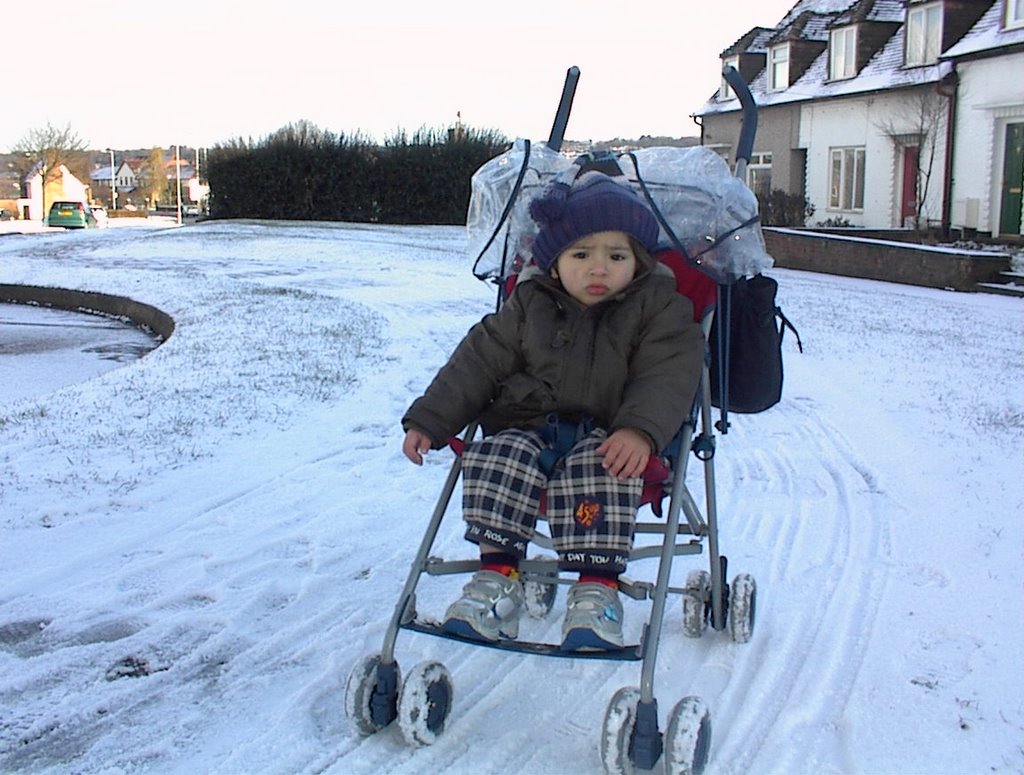
The temperature will apparently get up to a sweltering 13c or 14c at the weekend.the first time it's been above 10oc since October.Think I'll go swimming!
Monday, March 20, 2006
9 o'clock
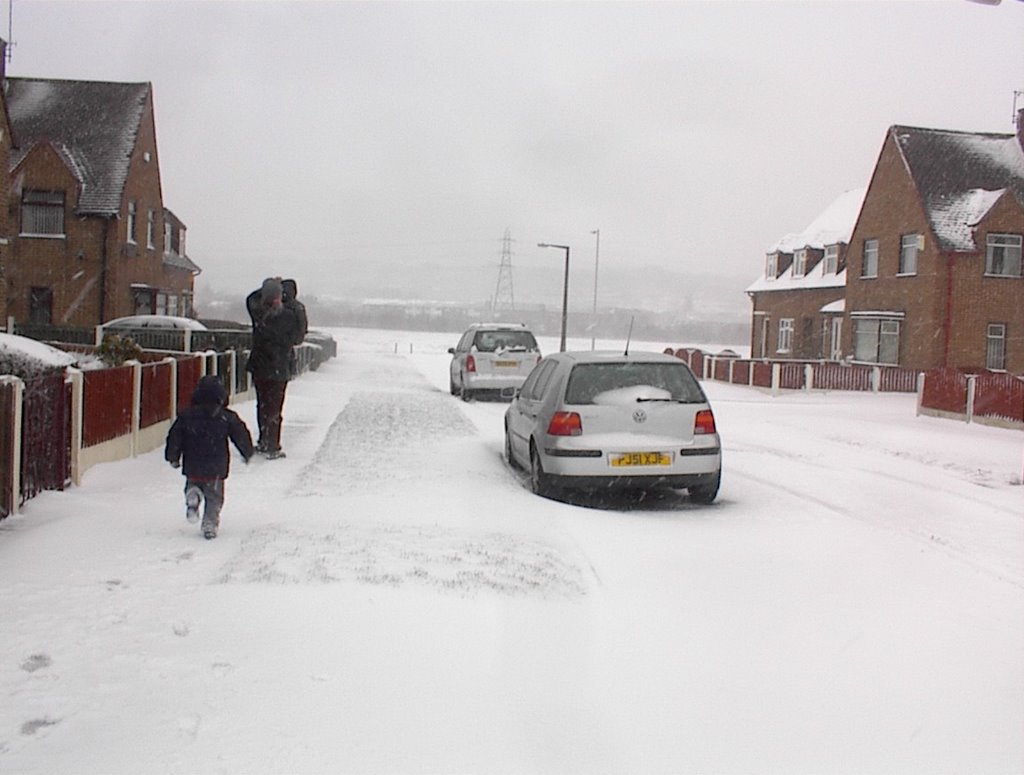
It is 9 o'clock and I have just got home from work.It seems late here. It is dark and very cold outside.Work is work, it doesn't bother me.I miss the people on the streets, I miss walking along the streets ,into the parks, through the markets after finishing work-be it 8,9 or even 10pm.Just watched the weather forecast.Heavy snow is expected on Thursday and Friday-23/24th March!! I am still enjoying the food here though,had a great roast yesterday, and finished the meat off in my sandwiches for lunch today.
Saturday, March 18, 2006
6 months
It is March 18th and winter is still very much here.It was snowing yesterday and there are snow showers around today. I am sitting in the kitchen with the cooker on to keep warm. I went to the pub last night for St Patricks day.After downing 5 pints of Guinness I walked home, thinking that the warm glow generated by a few pints would keep me warm.Oh! how I was wrong. Within seconds my ears stung with cold and then my face numbed with the wind. I had to keep my hands firmly in my pockets.After 5 minutes the cold seeped through to my legs and then feet.I got home keeping out of the way from the groups of 'hoodies' inexplicably hanging out around the estate. It is the coldest March for 20 years, and by the end of the month I think this will be longer.The weather forecast sees no end to the cold weather before the end of the month!
Winter has already lasted for 6 months, that is half a year.imagine spending half your life inside, escaping from the cold. this is the real England, not pints in the beer garden on a warm sunny evening. "Well the houses are warmer in the UK, you don't feel the cold so much" is the what people say when they have been away for a while.Bullshit! the houses are cold. I spent a total of 65 minutes waiting for buses, on my way to work and back yesterday.At 6pm in the bus station, most of the people around seem to have escaped from the local loony bin.
I have never looked forward to spring so much,so desperately.
I bought our tickets for Hong Kong this week. Teosdee and Jack arrive on the 1st of May.Joseph and I on Saturday the 6th-for 2 weeks.The flight arrives early saturday morning.If you know me, see you that night-you know where.
Winter has already lasted for 6 months, that is half a year.imagine spending half your life inside, escaping from the cold. this is the real England, not pints in the beer garden on a warm sunny evening. "Well the houses are warmer in the UK, you don't feel the cold so much" is the what people say when they have been away for a while.Bullshit! the houses are cold. I spent a total of 65 minutes waiting for buses, on my way to work and back yesterday.At 6pm in the bus station, most of the people around seem to have escaped from the local loony bin.
I have never looked forward to spring so much,so desperately.
I bought our tickets for Hong Kong this week. Teosdee and Jack arrive on the 1st of May.Joseph and I on Saturday the 6th-for 2 weeks.The flight arrives early saturday morning.If you know me, see you that night-you know where.
Sunday, March 12, 2006


Monday, March 06, 2006


Thursday, February 23, 2006
third world banking
Put a cheque in the bank on Monday(20thFeb), not a personal cheque, but a company cheque from one of the country's biggest companies.It will clear on Tuesday the 28th-8days.How can people here allow the banks quite obviously to keep their money for such a long time.£40m was stolen from the banks this morning, nice work if you can get it.British gas announced a 20%price hike, that's about 60% in the last year.This country is full of muppets who let themselves be walked all over.
Wednesday, February 22, 2006
The office
I am a civil servant now! If someone had said that I would be working for the civil service in the UK this time last year, I would have called them mad. I have had classroom training for 2 weeks now, and have 1 more week left in the classroom. There are a lot of rules and regulations and formulas to learn, but it is essentially a walk in the park. The government do look after their employees. We have 22 days holiday plus 11 days public holidays and sick days and 'other' days if required, and that is in the 1st year.I have booked my holidays for May(to go to Hong Kong).We had a security talk on the 1st day-I can't really go into specifics! I joined the union on the 2nd day, they do look after you.We are not allowed tests after training-only quizes.If you can't do the job after the training you are retrained. After 17 days in the classroom we will have 2-3 weeks consolidation-before we are actually let loose. They have a sports and leisure club. We can get free counselling and legal advice about anything-confidentially.My colleagues are really nice, we all went out on the piss last week. I could get used to this.It is still f-ing cold here.
I managed to get a laptop-kindly funded by the Open University(see homework below).
I have been talking to Jason(see pic below) over the internet and a couple of people in Hong Kong for free!! Jason put me onto this website www.skype.com, just downlaod the software, install and get free calls to other pc's via their e-mail address. There is no spyware , popups, or adverts.You can pay-to call non pc phones, but it is the biz.do it, (it can search through your email address book to see if anyone on it has signed up)and give me a call-for free.
I heard one of my mates in Hong Kong was dressed as a woman at the weekend in the och-what is going on?
I managed to get a laptop-kindly funded by the Open University(see homework below).
I have been talking to Jason(see pic below) over the internet and a couple of people in Hong Kong for free!! Jason put me onto this website www.skype.com, just downlaod the software, install and get free calls to other pc's via their e-mail address. There is no spyware , popups, or adverts.You can pay-to call non pc phones, but it is the biz.do it, (it can search through your email address book to see if anyone on it has signed up)and give me a call-for free.
I heard one of my mates in Hong Kong was dressed as a woman at the weekend in the och-what is going on?
my homework!
Why play with language? There’s a bison down by the lake
By Guy Cook (The art of English: Everyday creativity) 2006
Reviewed by Christopher Mercer
19/02/2006
Of course the title alone is enough to raise one’s interest in the article, and Guy Cook, explains this right away. The ‘There’s a bison down by the lake view’ put forward by Robert Dunbar (1996) put simply – if one prehistoric hunter could say this to another then their chances of catching the bison increased greatly. The idea is, that humans develop language to convey information. The main focus of the article is that
Guy Cook believes that language has many other uses apart from simply giving and receiving necessary information.
Guy Cook begins his theory by looking at how children use language. The main thrust being, that children don’t use language to purely convey meaning, but often use it for pure pleasure. He uses nursery rhymes , which are nonsensical and have no basis upon real life. He uses the following as an example;
“ Diddle diddle dumpling my son John
Went to bed with his trousers on”. . This example was, interestingly also used by Ronald Carter (Language and creativity:The Art of common Talk p2, 2006) he takes the view that this rhyme is taught as a means to establishing close interpersonal ties, where the rhyme is described as a performance with it’s emphasis on repetition and rhyme, the literal meaning being irrelevant . This aspect of creativity in language-‘performance’ is skipped by Guy Cook at this stage. I find myself disagreeing with both authors. I think that nursery rhymes are in fact short tales/fables/folklore passed down through the years and remembered by children because of their rhymes. The example that Guy Cook gives above is a prime example. Although the story may not at first be apparent , it did originally have a more concrete meaning. A quick check of the OED for ‘Diddle’ gave me the following definition - diddle, v.1 colloq 1. intr. To walk unsteadily, as a child; to toddle; 1632 QUARLES Div. Fancies I. iv. (1660) 3 And when his forward strength began to bloom, To see him diddle up and down the Room! (OED online19/02/2006) I suspect that the rhyme tells us about John, stumbling drunkedly home. Other rhymes such as –‘ring a ring a roses’ demonstrate that nursery rhymes do indeed tell a story..
‘ring a ring a roses,
a pocket full of poses
a-tishoo, a-tishoo
we all fall down’
…this one being about the Bubonic Plague. I have taught my own children a wide variety of nursery rhymes, the reason being that they help children develop their language skills, but yes as Ronald Carter puts it, also to develop a closer relationship with them.
Guy Cook tells us that children prefer computer games, TV and bedtime stories more than mundane tasks such as maths and homework. Children may indeed prefer playtime to ‘worktime’-as do I, but I found his comments lacked any real depth, they were even speculative, sweeping all children with the same brush. What research had he made about children’s language use and play? The results of research may well bear out his suppositions, I for one would be eager to learn more about how(and why?) children develop language.
Next, Guy Cook acquaints us with the features of language play, these are characterized in three steps- 1st – Repetition, of words, rhymes, stories, jokes.
2nd- Use of fictional worlds or situations
3rd – Social Function-bonding and exclusion.
These steps do provide, in my humble opinion, a good basis upon which to study children’s language use.
The article then moves on to possibly its main point- adults and language play. Guy Cook first looks at adults private language play, dismissing the play of children as just being a stage in their development due to the fact that adults continue this play. He uses valentine’s messages and lovers baby talk as examples. I’m not sure they are as private as he infers. He also maintains that adults share children’s love of fiction-TV (Drama, Soap operas) Pop songs, and the internet which he asserts is used mainly for games chat rooms and fantasies. Here, I must cry- where is the evidence? Where are the statistics?
Okay, in regards to television the evidence can easily be found and will most likely support Guy Cook, but what about the new craze for ‘Reality TV’? His sweeping statement about internet use astounded me, and why is ‘chat’ fictional? I looked for some evidence either way and found the following top 50 websites published by ComScore Media Metrix(http://www.comscore.com/press/release.asp?id=710) (fig1) a respected web research company used by the BBC(http://news.bbc.co.uk/1/hi/technology/2867855.stm) 20.03.03 The top 20 internet sites comprise of amongst others- Ebay, WalMart, New York Times, The Weather Channel , Apple computers, and AT&T – none offering gaming, chat or fictional content. I actually came to the opposite conclusion regarding people’s use of the internet- people use it to find information and to communicate with others. Also I checked the equivalent of Nielsen: Alexa, another ratings agency see- Top English Language Sites( Updated Daily) 1. Yahoo! www.yahoo.com - 2. Microsoft Network (MSN) www.msn.com 3. Google www.google.com 4. EBay www.ebay.com 5. Passport.net www.passport.net - 6. Myspace www.myspace.com - 7. Amazon.com www.amazon.com - 8. Microsoft Corporation www.microsoft.com - 9. Google UK www.google.co.uk 10. BBC Online www.bbc.co.uk (http://www.alexa.com/site/ds/top_500) 2/20/2006
Of course , a lot of users will play games and live out their fantasies , but without evidence to the contrary I believe these groups are amongst the minority.
Figure 1.
Top 25 Properties December 2005 Total U.S. – Home, Work and University Locations Unique Visitors (000) Source: comScore Media Metrix
Rank Property Unique Visitors
(000)
Total Internet Users 170,285
1 Yahoo! Sites 127,132
2 MSN-Microsoft Sites 116,665
3 Time Warner Network 116,381
4 Google Sites 93,124
5 eBay 74,814
6 Amazon Sites 57,604
7 Ask Jeeves 42,440
8 Wal-Mart 38,069
9 Viacom Online 36,728
10 New York Times Digital 34,335
11 Myspace.com 32,209
12 Verizon Communications Corp. 32,063
13 CNET Networks 31,407
14 Target Corporation 31,178
15 Weather Channel, The 30,512
16 Walt Disney Internet Group (WDIG) 29,939
17 Apple Computer, Inc. 27,906
18 United Online, Inc 27,906
19 AT&T, Inc. 26,109
20 Vendare Media 24,706
21 Lycos, Inc. 24,672
22 Monster Worldwide 24,443
23 Best Buy Sites 23,976
24 Shopzilla.com Sites 23,172
25 Overstock.com 22,917
Guy Cook does state that although we may play with language privately, we use this language play to assume a group identity-shared hobbies, ideas, to create and keep relationships. He then moves on to discuss our language play in public, especially advertisements, but also songs, jokes and graffiti. He continues to draw parallels to child’s play, but it is at this point I ask myself- do adults copy children? Or do children copy adults? I came to the conclusion that it doesn’t really matter if we call language play ‘child’s play’ or not, it is more important to understand why we play with our language. Guy Cook highlights an example of language play- ‘verbal duelling’, between different members of society, most notably barristers and politicians. It is really only here that Guy Cook reveals to us his real theory. As we head towards the conclusion we are left with the feeling that we have been taken upon a ride purely to awaken our interest in the task at hand.
Does ‘play’ have a more profound use? Can it be just to help us find the bison? Guy Cook sets in motion the more complex issue of language and play and directs us to look at creativity –creative thinking, poems and song. He suggests that our use of creativity may enable us to expand ourselves and therefore humanity by enabling the mind to contemplate beyond its experiences. He argues that through creativity we are able to rebel against conformity and become liberated. The last few centuries have certainly proved this to be the case. Literature has often been used to establish ideas alien to people before e.g-Animal Farm-George Orwell, Vindication of the Rights of Women- Mary Wollstonecraft. Guy Cook uses Bob Dylan and Martin Luther King as examples, but the point is much the same, our use of language can influence the whole of society. Language ,creativity and advancement are linked.
To conclude Guy Cook accepts that language play actually is related to ‘ there’s a bison down by the lake’ in that use of creative language endears us to other people and like animals, it teaches us skills we may need to survive at the most basic level and at a species level. As well as this we need language to express ourselves, to create relationships, group cohesion and to create individuality.
My own conclusion is that this article ingeniously takes us through the ‘lifetime’ of language and whets our appetites for more on the subject of language and creativity and indeed humanity. Creativity and ‘performance’ are briefly looked at, and I believe that’s where we can find a deeper insight into these theories. If you have an interest in how we use, and why we use our language as we do, then this article is definitely a good place to start.
Bibliography/references
Book Title Author Editor Year Chapter Publisher edition Article/reading page
Language and creativity:The Art of common Talk Ronald Carter 2006 1 Routledge 2nd introduction 2
The Art Of English:Everyday creativity Janet Maybin, Joan Swann 2006 1-3 Palgrave Macmillan 1st
The Art Of English:Everyday creativity Janet Maybin, Joan Swann 2006 1 Palgrave Macmillan 1st
The Art Of English:Everyday creativity Ronald Carter Janet Maybin, Joan Swann 2006 1 Palgrave Macmillan 1st Extracts from common language :corpus,creativity and cognition 29
The Art Of English:Everyday creativity Guy Cook Janet Maybin, Joan Swann 2006 1 Palgrave Macmillan 1st Why play with language? 37
The Art Of English:Everyday creativity Lynne Cameron Janet Maybin, Joan Swann 2006 1 Palgrave Macmillan 1st Metaphor in everyday language 46
The Art Of English:Everyday creativity Joan Swann Janet Maybin, Joan Swann 2006 1 Palgrave Macmillan The art of the everyday 3-29
The Art Of English:Everyday creativity-study guide 1 Alan Owen 2006 1 Open University
http://www.alexa.com/site/ds/top_500
20.2.2006 Alexa.com Top 500 websites
http://news.bbc.co.uk/1/hi/technology/2867855.stm
20.03.03 bbc Iraq conflict hits websites hard
http://www.comscore.com/press/release.asp?id=710
19.02.06 comscore Top 50 websites
OED online
http://dictionary.oed.com/ 19.2.06 Oxford
By Guy Cook (The art of English: Everyday creativity) 2006
Reviewed by Christopher Mercer
19/02/2006
Of course the title alone is enough to raise one’s interest in the article, and Guy Cook, explains this right away. The ‘There’s a bison down by the lake view’ put forward by Robert Dunbar (1996) put simply – if one prehistoric hunter could say this to another then their chances of catching the bison increased greatly. The idea is, that humans develop language to convey information. The main focus of the article is that
Guy Cook believes that language has many other uses apart from simply giving and receiving necessary information.
Guy Cook begins his theory by looking at how children use language. The main thrust being, that children don’t use language to purely convey meaning, but often use it for pure pleasure. He uses nursery rhymes , which are nonsensical and have no basis upon real life. He uses the following as an example;
“ Diddle diddle dumpling my son John
Went to bed with his trousers on”. . This example was, interestingly also used by Ronald Carter (Language and creativity:The Art of common Talk p2, 2006) he takes the view that this rhyme is taught as a means to establishing close interpersonal ties, where the rhyme is described as a performance with it’s emphasis on repetition and rhyme, the literal meaning being irrelevant . This aspect of creativity in language-‘performance’ is skipped by Guy Cook at this stage. I find myself disagreeing with both authors. I think that nursery rhymes are in fact short tales/fables/folklore passed down through the years and remembered by children because of their rhymes. The example that Guy Cook gives above is a prime example. Although the story may not at first be apparent , it did originally have a more concrete meaning. A quick check of the OED for ‘Diddle’ gave me the following definition - diddle, v.1 colloq 1. intr. To walk unsteadily, as a child; to toddle; 1632 QUARLES Div. Fancies I. iv. (1660) 3 And when his forward strength began to bloom, To see him diddle up and down the Room! (OED online19/02/2006) I suspect that the rhyme tells us about John, stumbling drunkedly home. Other rhymes such as –‘ring a ring a roses’ demonstrate that nursery rhymes do indeed tell a story..
‘ring a ring a roses,
a pocket full of poses
a-tishoo, a-tishoo
we all fall down’
…this one being about the Bubonic Plague. I have taught my own children a wide variety of nursery rhymes, the reason being that they help children develop their language skills, but yes as Ronald Carter puts it, also to develop a closer relationship with them.
Guy Cook tells us that children prefer computer games, TV and bedtime stories more than mundane tasks such as maths and homework. Children may indeed prefer playtime to ‘worktime’-as do I, but I found his comments lacked any real depth, they were even speculative, sweeping all children with the same brush. What research had he made about children’s language use and play? The results of research may well bear out his suppositions, I for one would be eager to learn more about how(and why?) children develop language.
Next, Guy Cook acquaints us with the features of language play, these are characterized in three steps- 1st – Repetition, of words, rhymes, stories, jokes.
2nd- Use of fictional worlds or situations
3rd – Social Function-bonding and exclusion.
These steps do provide, in my humble opinion, a good basis upon which to study children’s language use.
The article then moves on to possibly its main point- adults and language play. Guy Cook first looks at adults private language play, dismissing the play of children as just being a stage in their development due to the fact that adults continue this play. He uses valentine’s messages and lovers baby talk as examples. I’m not sure they are as private as he infers. He also maintains that adults share children’s love of fiction-TV (Drama, Soap operas) Pop songs, and the internet which he asserts is used mainly for games chat rooms and fantasies. Here, I must cry- where is the evidence? Where are the statistics?
Okay, in regards to television the evidence can easily be found and will most likely support Guy Cook, but what about the new craze for ‘Reality TV’? His sweeping statement about internet use astounded me, and why is ‘chat’ fictional? I looked for some evidence either way and found the following top 50 websites published by ComScore Media Metrix(http://www.comscore.com/press/release.asp?id=710) (fig1) a respected web research company used by the BBC(http://news.bbc.co.uk/1/hi/technology/2867855.stm) 20.03.03 The top 20 internet sites comprise of amongst others- Ebay, WalMart, New York Times, The Weather Channel , Apple computers, and AT&T – none offering gaming, chat or fictional content. I actually came to the opposite conclusion regarding people’s use of the internet- people use it to find information and to communicate with others. Also I checked the equivalent of Nielsen: Alexa, another ratings agency see- Top English Language Sites( Updated Daily) 1. Yahoo! www.yahoo.com - 2. Microsoft Network (MSN) www.msn.com 3. Google www.google.com 4. EBay www.ebay.com 5. Passport.net www.passport.net - 6. Myspace www.myspace.com - 7. Amazon.com www.amazon.com - 8. Microsoft Corporation www.microsoft.com - 9. Google UK www.google.co.uk 10. BBC Online www.bbc.co.uk (http://www.alexa.com/site/ds/top_500) 2/20/2006
Of course , a lot of users will play games and live out their fantasies , but without evidence to the contrary I believe these groups are amongst the minority.
Figure 1.
Top 25 Properties December 2005 Total U.S. – Home, Work and University Locations Unique Visitors (000) Source: comScore Media Metrix
Rank Property Unique Visitors
(000)
Total Internet Users 170,285
1 Yahoo! Sites 127,132
2 MSN-Microsoft Sites 116,665
3 Time Warner Network 116,381
4 Google Sites 93,124
5 eBay 74,814
6 Amazon Sites 57,604
7 Ask Jeeves 42,440
8 Wal-Mart 38,069
9 Viacom Online 36,728
10 New York Times Digital 34,335
11 Myspace.com 32,209
12 Verizon Communications Corp. 32,063
13 CNET Networks 31,407
14 Target Corporation 31,178
15 Weather Channel, The 30,512
16 Walt Disney Internet Group (WDIG) 29,939
17 Apple Computer, Inc. 27,906
18 United Online, Inc 27,906
19 AT&T, Inc. 26,109
20 Vendare Media 24,706
21 Lycos, Inc. 24,672
22 Monster Worldwide 24,443
23 Best Buy Sites 23,976
24 Shopzilla.com Sites 23,172
25 Overstock.com 22,917
Guy Cook does state that although we may play with language privately, we use this language play to assume a group identity-shared hobbies, ideas, to create and keep relationships. He then moves on to discuss our language play in public, especially advertisements, but also songs, jokes and graffiti. He continues to draw parallels to child’s play, but it is at this point I ask myself- do adults copy children? Or do children copy adults? I came to the conclusion that it doesn’t really matter if we call language play ‘child’s play’ or not, it is more important to understand why we play with our language. Guy Cook highlights an example of language play- ‘verbal duelling’, between different members of society, most notably barristers and politicians. It is really only here that Guy Cook reveals to us his real theory. As we head towards the conclusion we are left with the feeling that we have been taken upon a ride purely to awaken our interest in the task at hand.
Does ‘play’ have a more profound use? Can it be just to help us find the bison? Guy Cook sets in motion the more complex issue of language and play and directs us to look at creativity –creative thinking, poems and song. He suggests that our use of creativity may enable us to expand ourselves and therefore humanity by enabling the mind to contemplate beyond its experiences. He argues that through creativity we are able to rebel against conformity and become liberated. The last few centuries have certainly proved this to be the case. Literature has often been used to establish ideas alien to people before e.g-Animal Farm-George Orwell, Vindication of the Rights of Women- Mary Wollstonecraft. Guy Cook uses Bob Dylan and Martin Luther King as examples, but the point is much the same, our use of language can influence the whole of society. Language ,creativity and advancement are linked.
To conclude Guy Cook accepts that language play actually is related to ‘ there’s a bison down by the lake’ in that use of creative language endears us to other people and like animals, it teaches us skills we may need to survive at the most basic level and at a species level. As well as this we need language to express ourselves, to create relationships, group cohesion and to create individuality.
My own conclusion is that this article ingeniously takes us through the ‘lifetime’ of language and whets our appetites for more on the subject of language and creativity and indeed humanity. Creativity and ‘performance’ are briefly looked at, and I believe that’s where we can find a deeper insight into these theories. If you have an interest in how we use, and why we use our language as we do, then this article is definitely a good place to start.
Bibliography/references
Book Title Author Editor Year Chapter Publisher edition Article/reading page
Language and creativity:The Art of common Talk Ronald Carter 2006 1 Routledge 2nd introduction 2
The Art Of English:Everyday creativity Janet Maybin, Joan Swann 2006 1-3 Palgrave Macmillan 1st
The Art Of English:Everyday creativity Janet Maybin, Joan Swann 2006 1 Palgrave Macmillan 1st
The Art Of English:Everyday creativity Ronald Carter Janet Maybin, Joan Swann 2006 1 Palgrave Macmillan 1st Extracts from common language :corpus,creativity and cognition 29
The Art Of English:Everyday creativity Guy Cook Janet Maybin, Joan Swann 2006 1 Palgrave Macmillan 1st Why play with language? 37
The Art Of English:Everyday creativity Lynne Cameron Janet Maybin, Joan Swann 2006 1 Palgrave Macmillan 1st Metaphor in everyday language 46
The Art Of English:Everyday creativity Joan Swann Janet Maybin, Joan Swann 2006 1 Palgrave Macmillan The art of the everyday 3-29
The Art Of English:Everyday creativity-study guide 1 Alan Owen 2006 1 Open University
http://www.alexa.com/site/ds/top_500
20.2.2006 Alexa.com Top 500 websites
http://news.bbc.co.uk/1/hi/technology/2867855.stm
20.03.03 bbc Iraq conflict hits websites hard
http://www.comscore.com/press/release.asp?id=710
19.02.06 comscore Top 50 websites
OED online
http://dictionary.oed.com/ 19.2.06 Oxford



Wednesday, February 15, 2006


Monday, February 06, 2006
filipino names(from the BBC)
The Philippine name game
By Sarah Toms
BBC News, Manila
Naming a child is often a difficult decision. For many Filipinos, individuality is an important factor, with many choosing unconventional first names. So when the BBC's Sarah Toms gave birth in the Philippines, could she come up with an original name?
In March, my daughter will be celebrating her second birthday in Manila.
Made in the Philippines and born in the Philippines, it seems only yesterday that I was trying to leave hospital with my newborn.
The nurses had quickly christened her "Miss Philippines" because of her long legs.
But then I discovered that until I came up with a real name and began her birth registration at the hospital, I would not be allowed to leave.
Exhaustion made any decision difficult and I started worrying I would be celebrating her first birthday in the hospital if I did not find a name soon.
'Ace' politician
Filipinos place serious importance on finding unique names for their children, most of them injected with a large dose of Philippine humour.
Here, there is nothing ironic about a senator called Joker Arroyo - it is his real name.
Joker Arroyo, who is no relation to the Philippine President Gloria Arroyo, has a brother called Jack but there is no word on any other siblings called Queen or King.
Another politician however, is known as Ace.
Congressman Robert Ace Barbers is always known by his middle name as his two other brothers and late father all share Robert as their first name.
One composite name that has become popular is Luzviminda, taken from the three main regions of the Philippines: Luzon, Visayas and Mindanao.
One writer said it is like being called "Engscowani" for England, Scotland, Wales and Northern Ireland.
In this devoutly Roman Catholic country it is not surprising that many have taken on religious names, but with a Philippine twist.
With a rapidly growing population, it seems there are not enough last names to go round
Take the mayor of Makati, the financial district in Manila.
His name is Jejomar, composed of the first few letters of Jesus, Joseph and Mary.
Catholicism started here with the arrival of the Spanish in 1521 and the colonisation of the Philippines.
Beyond food and architecture, religion is one of the lasting influences of Spanish rule. And that is at the root of the desire to have a unique first name.
Many Filipinos who converted to Catholicism took on surnames with religious references, such as Santos or De la Cruz, for good luck. But this resulted in many people having the same last names.
To solve the problem, the Spanish decided to restrict the surnames of Filipinos to a number of acceptable ones. But with a rapidly growing population, it seems there are not enough last names to go round.
Originality
Security experts say that with so many surnames being the same it can take ages to do background checks.
A first name with a bit of individuality can help avoid confusion and cases of mistaken identity
Filipinos encounter their own problems with the country's notoriously poor records system.
Getting a bank loan or passport can be a nightmare if someone with the same name is wanted for a crime.
With the country ranked as one of the most corrupt in Asia, thousands of Filipinos are forced to walk around with certificates from the National Bureau of Investigation to prove they are not wanted criminals.
So a first name with a bit of individuality can help avoid confusion and cases of mistaken identity.
Because of that I know a Peachy, a Preciosa and even a Bogi. I also know a Boy and a Girlie, names that often come from being the lone son or daughter in a large family.
One journalist friend told me of an interview he had with a Hitler Manila
I even have a female friend called Ken and no one thinks it is odd.
Still, I was taken aback when a famous and middle-aged newspaper columnist asked me to call him Babe.
Cultural misunderstanding
Some of the names are real and some are nicknames, but it is hard to tell them apart.
That brings me to the doorbell names: it is not uncommon to call your little one Bing, Bong, Bong Bong and even Ping and Ting.
Another category is the rock 'n' roll name.
How would you feel being christened Led Zeppelin, Mick Jagger or Nirvana?
One journalist friend told me of an interview he had with a Hitler Manila.
Mr Manila, who does not share the Nazi ideology, told him that he was always remembered for his name but it sometimes caused problems.
One time, when he was shooting pool with some visiting Germans, the atmosphere became tense after he wrote his name on the blackboard to reserve the next game.
Another friend told me of a couple who named their five daughters Candy, Caramel, Cookie, Peanut and Popcorn
Order was not restored until he pulled out his driving licence to prove his name really was Hitler.
Still, that experience did not stop him from carrying on the family tradition. His sons are named Himmler and Hess after two of Hitler's closest associates.
Deliberation
Another friend told me of a couple who named their five daughters Candy, Caramel, Cookie, Peanut and Popcorn.
Scott Harrison, an American businessman here, says he has heard of a woman who gave birth to twin girls on either side of midnight, naming them Sunday and Monday.
Nothing unusual in that - my daughter's kindergarten teacher is called Wednesday.
So what did I name my daughter?
After much deliberation and temptation to join the Philippine name game, I settled for an old French favourite, Elise.
Elise is not a strange name by any means, but in the Philippines it is as unusual as you can get.
From Our Own Correspondent was broadcast on Saturday, 14 January, 2006 at 1130 GMT on BBC Radio 4. Please check the programme schedules for World Service transmission times.
THREE WAYS TO LISTEN AGAIN
Listen to the programme Download the mp3 (8 Mb)
Story from BBC NEWS:
http://news.bbc.co.uk/go/pr/fr/-/1/hi/programmes/from_our_own_correspondent/4609892.stm
Published: 2006/01/14 13:29:33 GMT
© BBC MMVI
By Sarah Toms
BBC News, Manila
Naming a child is often a difficult decision. For many Filipinos, individuality is an important factor, with many choosing unconventional first names. So when the BBC's Sarah Toms gave birth in the Philippines, could she come up with an original name?
In March, my daughter will be celebrating her second birthday in Manila.
Made in the Philippines and born in the Philippines, it seems only yesterday that I was trying to leave hospital with my newborn.
The nurses had quickly christened her "Miss Philippines" because of her long legs.
But then I discovered that until I came up with a real name and began her birth registration at the hospital, I would not be allowed to leave.
Exhaustion made any decision difficult and I started worrying I would be celebrating her first birthday in the hospital if I did not find a name soon.
'Ace' politician
Filipinos place serious importance on finding unique names for their children, most of them injected with a large dose of Philippine humour.
Here, there is nothing ironic about a senator called Joker Arroyo - it is his real name.
Joker Arroyo, who is no relation to the Philippine President Gloria Arroyo, has a brother called Jack but there is no word on any other siblings called Queen or King.
Another politician however, is known as Ace.
Congressman Robert Ace Barbers is always known by his middle name as his two other brothers and late father all share Robert as their first name.
One composite name that has become popular is Luzviminda, taken from the three main regions of the Philippines: Luzon, Visayas and Mindanao.
One writer said it is like being called "Engscowani" for England, Scotland, Wales and Northern Ireland.
In this devoutly Roman Catholic country it is not surprising that many have taken on religious names, but with a Philippine twist.
With a rapidly growing population, it seems there are not enough last names to go round
Take the mayor of Makati, the financial district in Manila.
His name is Jejomar, composed of the first few letters of Jesus, Joseph and Mary.
Catholicism started here with the arrival of the Spanish in 1521 and the colonisation of the Philippines.
Beyond food and architecture, religion is one of the lasting influences of Spanish rule. And that is at the root of the desire to have a unique first name.
Many Filipinos who converted to Catholicism took on surnames with religious references, such as Santos or De la Cruz, for good luck. But this resulted in many people having the same last names.
To solve the problem, the Spanish decided to restrict the surnames of Filipinos to a number of acceptable ones. But with a rapidly growing population, it seems there are not enough last names to go round.
Originality
Security experts say that with so many surnames being the same it can take ages to do background checks.
A first name with a bit of individuality can help avoid confusion and cases of mistaken identity
Filipinos encounter their own problems with the country's notoriously poor records system.
Getting a bank loan or passport can be a nightmare if someone with the same name is wanted for a crime.
With the country ranked as one of the most corrupt in Asia, thousands of Filipinos are forced to walk around with certificates from the National Bureau of Investigation to prove they are not wanted criminals.
So a first name with a bit of individuality can help avoid confusion and cases of mistaken identity.
Because of that I know a Peachy, a Preciosa and even a Bogi. I also know a Boy and a Girlie, names that often come from being the lone son or daughter in a large family.
One journalist friend told me of an interview he had with a Hitler Manila
I even have a female friend called Ken and no one thinks it is odd.
Still, I was taken aback when a famous and middle-aged newspaper columnist asked me to call him Babe.
Cultural misunderstanding
Some of the names are real and some are nicknames, but it is hard to tell them apart.
That brings me to the doorbell names: it is not uncommon to call your little one Bing, Bong, Bong Bong and even Ping and Ting.
Another category is the rock 'n' roll name.
How would you feel being christened Led Zeppelin, Mick Jagger or Nirvana?
One journalist friend told me of an interview he had with a Hitler Manila.
Mr Manila, who does not share the Nazi ideology, told him that he was always remembered for his name but it sometimes caused problems.
One time, when he was shooting pool with some visiting Germans, the atmosphere became tense after he wrote his name on the blackboard to reserve the next game.
Another friend told me of a couple who named their five daughters Candy, Caramel, Cookie, Peanut and Popcorn
Order was not restored until he pulled out his driving licence to prove his name really was Hitler.
Still, that experience did not stop him from carrying on the family tradition. His sons are named Himmler and Hess after two of Hitler's closest associates.
Deliberation
Another friend told me of a couple who named their five daughters Candy, Caramel, Cookie, Peanut and Popcorn.
Scott Harrison, an American businessman here, says he has heard of a woman who gave birth to twin girls on either side of midnight, naming them Sunday and Monday.
Nothing unusual in that - my daughter's kindergarten teacher is called Wednesday.
So what did I name my daughter?
After much deliberation and temptation to join the Philippine name game, I settled for an old French favourite, Elise.
Elise is not a strange name by any means, but in the Philippines it is as unusual as you can get.
From Our Own Correspondent was broadcast on Saturday, 14 January, 2006 at 1130 GMT on BBC Radio 4. Please check the programme schedules for World Service transmission times.
THREE WAYS TO LISTEN AGAIN
Listen to the programme Download the mp3 (8 Mb)
Story from BBC NEWS:
http://news.bbc.co.uk/go/pr/fr/-/1/hi/programmes/from_our_own_correspondent/4609892.stm
Published: 2006/01/14 13:29:33 GMT
© BBC MMVI
footie
I went to the pub last night in Upton (Wirral) to watch the Liverpool-Chelsea game. Unlike when I watch the game in Hong Kong, when Chelsea scored you could hear a pin drop, not one cheer from an opposing fan.This is quite surprising, as here on the Wirral there are a lot of Everton or Tranmere fans. Liverpool lost unfortunately, and the goalie was sent off unfairly, but I did enjoy watching the game and having a decent pint.
I had my first tutorial for my English- past, present and future course on Saturday morning.I have my first one for Art of English next Saturday. I have 2 essays due this month. It feels good to be studying. Start work tomorrow!
I had my first tutorial for my English- past, present and future course on Saturday morning.I have my first one for Art of English next Saturday. I have 2 essays due this month. It feels good to be studying. Start work tomorrow!
Wednesday, February 01, 2006
Kung Hey Fat Choi! 'laa'
So , February is here. It is 0c outside-10.30am, we have had this cold snap for 10 days now, with no end in sight and no snow either. I actually think I'm getting used to the cold! It may be psychological though, the end is now in sight, there must be a chance of the weather improving in March, with at least a warm day or two. There is still only 8 hours of daytime, that is 16 hours of nighttime! That will definitely improve.
I begin work next Tuesday with the CSA- the child support agency. This job will do me until I decide to leave the UK. The money is better than English Teaching which according to the job advertisements that I get from TEFL.com only pay about £250 per week!! 90% of those jobs are down South, how people can live on that I don't know. That works out at Hk$14,500 per month.the cost of living is about the same here as in Hong Kong.Beer and food is cheaper, rent is the same, transport and utilities are more expensive.
I will decide if to stay for another year(or not) in October when I finish my OU course, but the chances are that I will return to Hong Kong.
We went to the Chinese New Year celebrations in Liverpool on Sunday- Lion dances, dragon dances and lots of firecrackers- HK on a smaller scale.It made me very homesick though. I noticed a lot of mainland Chinese tour groups, why they would come to Liverpool is beyond me.
Kung Hey Fat Choi!
I begin work next Tuesday with the CSA- the child support agency. This job will do me until I decide to leave the UK. The money is better than English Teaching which according to the job advertisements that I get from TEFL.com only pay about £250 per week!! 90% of those jobs are down South, how people can live on that I don't know. That works out at Hk$14,500 per month.the cost of living is about the same here as in Hong Kong.Beer and food is cheaper, rent is the same, transport and utilities are more expensive.
I will decide if to stay for another year(or not) in October when I finish my OU course, but the chances are that I will return to Hong Kong.
We went to the Chinese New Year celebrations in Liverpool on Sunday- Lion dances, dragon dances and lots of firecrackers- HK on a smaller scale.It made me very homesick though. I noticed a lot of mainland Chinese tour groups, why they would come to Liverpool is beyond me.
Kung Hey Fat Choi!
Subscribe to:
Posts (Atom)